
Ask the people you admire. See what each of them said.
Get Mentors is the product I wanted for years. Pick a board of 3 to 5 investors, founders, writers, and thinkers, ask a question about a career, money, or life decision, and see their answers side by side, with a source on every card. It is live on iOS, with Android to follow.
Get it on the App StoreAsk the people you admire
Version 3.0 does one thing. You ask a question, and your board of investors, founders, writers, and thinkers answers side by side with what each of them has said in public.
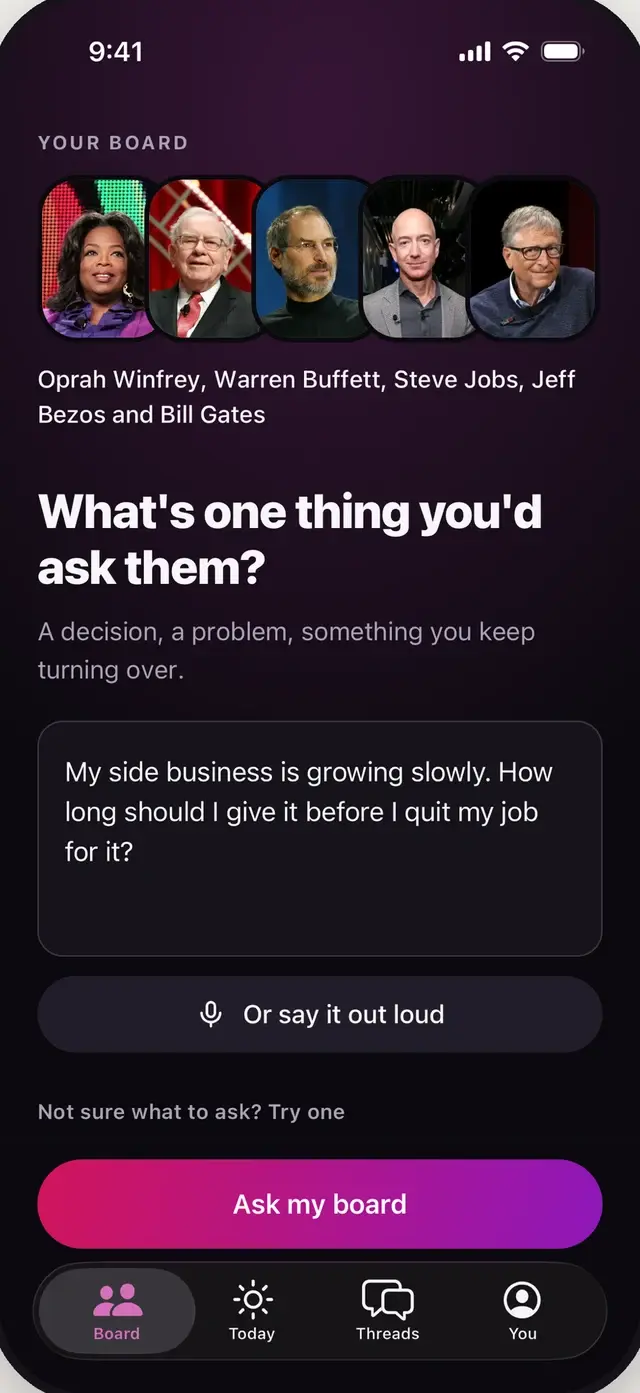

Pick 3 to 5 people you admire and ask what is on your mind.
Each person gets a card with what they have said, and a line shows where the board agrees and splits.
Quotes come only from a named source and are marked verified. Everything else is labelled a summary.
Ask your board
Pick 3 to 5 people you admire and ask what is on your mind.
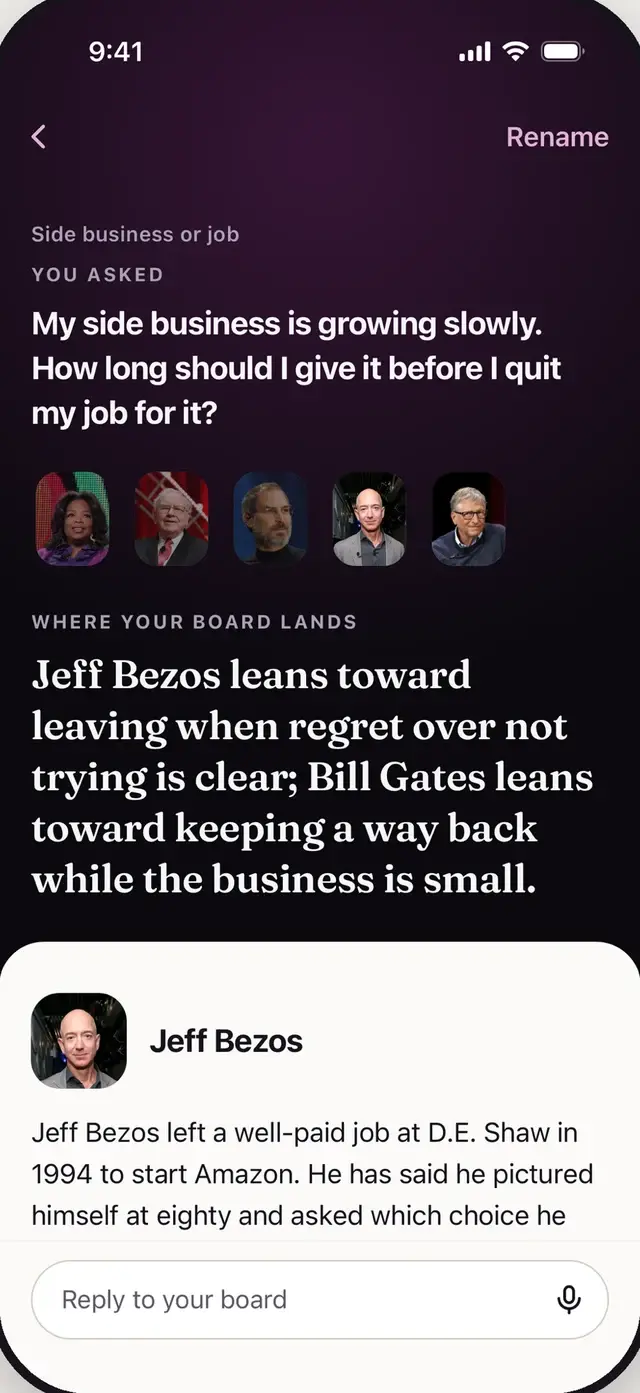
See where they agree
Each person gets a card with what they have said, and a line shows where the board agrees and splits.
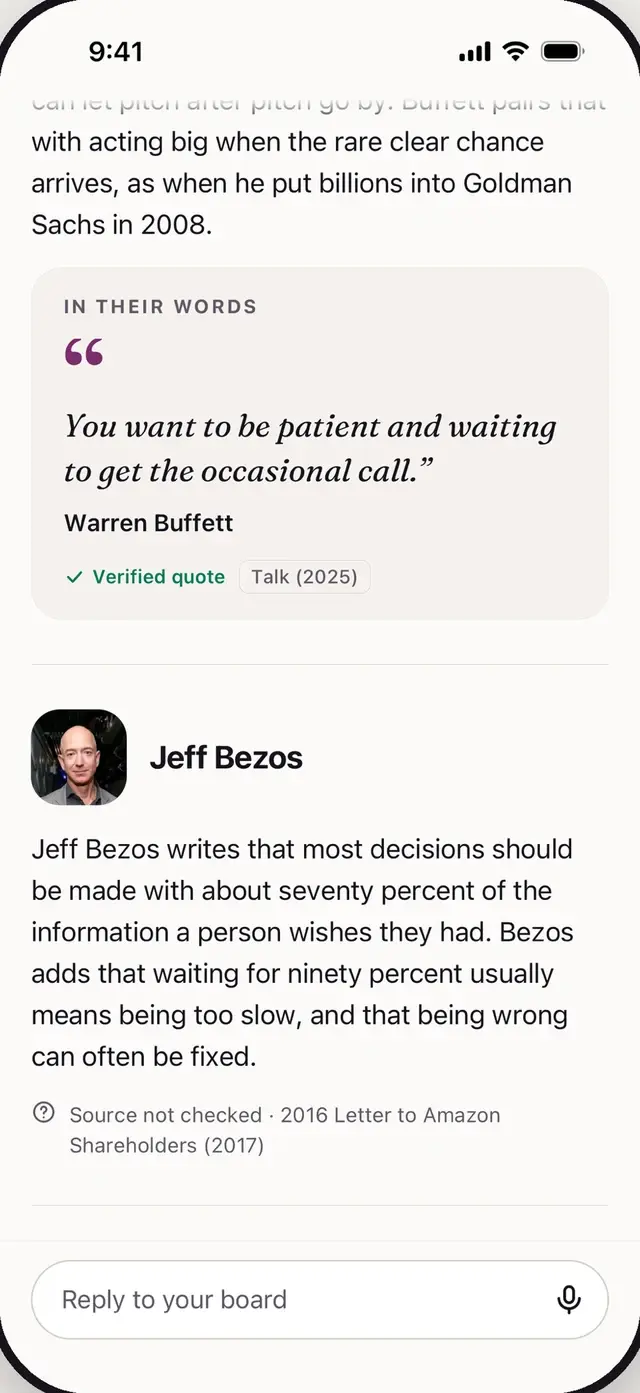
Every card has a source
Quotes come only from a named source and are marked verified. Everything else is labelled a summary.
What the product proves
Structured mentor intelligence
A custom data-enrichment process turns public source material from about 195 people into structured profiles and retrieval context.
Answers you can check
Board answers, threads, and a short Today feed use retrieval and context assembly, with strict rules on what can appear as a quote.
Founder-led GTM
The product includes public SEO surfaces, App Store positioning, pricing, onboarding, email capture, content loops, and a real subscription path.
Why I built it
I spent years studying founders, operators, investors, thinkers, and high performers. The pattern was obvious: people have endless content, but not enough direction, context, follow-through, or practical translation into daily behavior.
Get Mentors is my attempt to turn that obsession into software. It is not a coaching business. Version 3.0 cut journeys, plans, and mentor chat so the app could do one thing well, show you what the people you admire have said about your question.
The build forced me to operate across product, engineering, AI, content systems, mobile performance, backend APIs, App Store releases, pricing, onboarding, analytics, and GTM.
That is why it is the flagship venture on this site. It shows the kind of role I am built for: ambiguous AI product problems where someone needs to understand the user, shape the system, write the code, and keep moving.